Does Homeowners Insurance Cover Slab Leaks? What’s Covered, What Isn’t, and Why
You’ve just found out there’s a leak under your slab. Right after “how much will this cost?” comes the next question: “Will my insurance pay for it?”
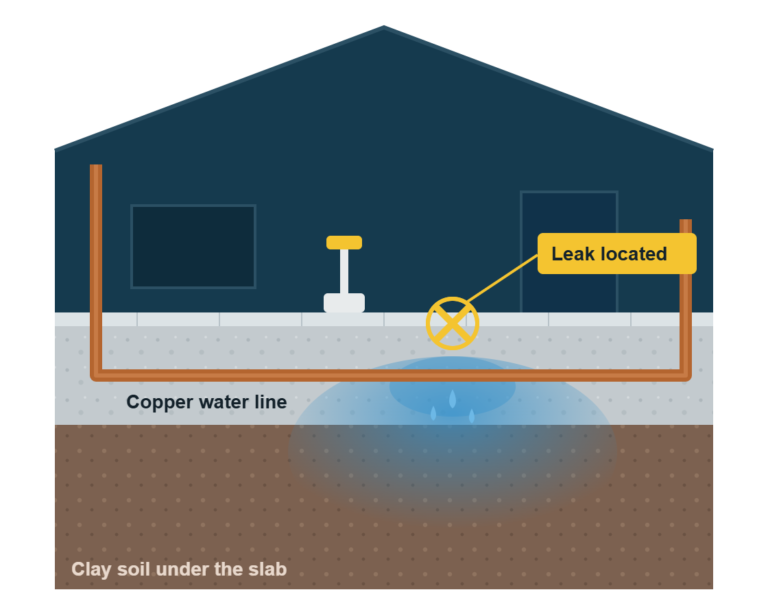
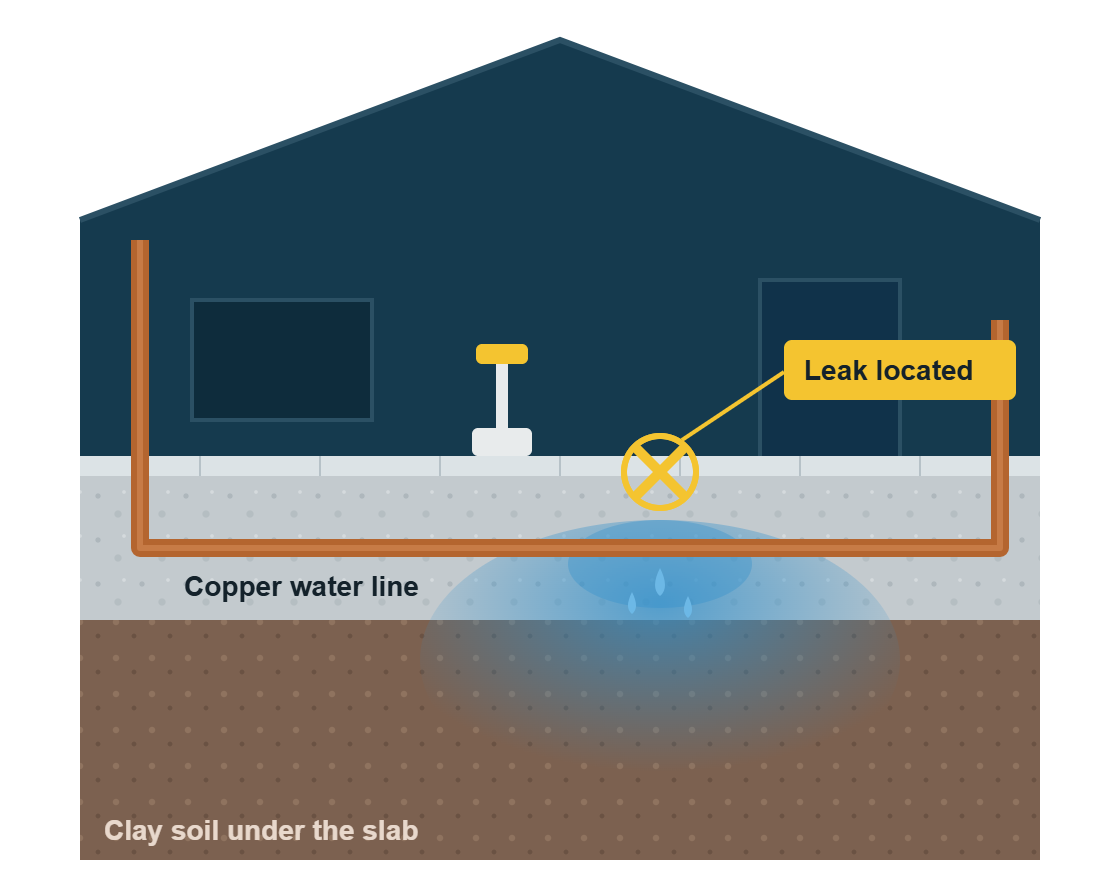
The frustrating answer is: partly, maybe. Homeowners insurance doesn’t treat a slab leak as one thing. It splits it into pieces, and each piece is handled differently. Understanding those pieces before you call your insurer can save you a lot of confusion, and sometimes a lot of money.
Please note: This article is general information, not insurance or legal advice. Every policy is different. Always check your own policy and talk to your insurance agent or company about your specific situation.
The Short Answer
With a standard homeowners policy, a slab leak is usually broken into these parts:
Usually not covered
Often covered (when the loss is covered)
Varies: ask first
The one rule that drives most of these answers is the difference between sudden and gradual.
The Big Rule: Sudden vs. Gradual
Homeowners policies are built to cover sudden and accidental events, not slow problems that develop over time.
Generally what policies cover
Sudden and accidental
A pipe under your slab fails, and water starts escaping. You notice it and act quickly. This is the kind of event policies are generally designed for.
Often excluded
Gradual or long-running
A slow leak has been seeping under your slab for weeks or months. Many policies exclude this.
The “continuous or repeated seepage” exclusion
Many homeowners policies include an exclusion for continuous or repeated seepage or leakage of water. Some policies define this with a specific time period, such as 14 days or more. If an insurer decides your leak had been running longer than that, it may deny coverage for the damage.
How courts interpret this exclusion varies from state to state and case to case, so the exact wording in your policy matters.
What this means for you:
This is one more reason why checking your water meter regularly matters. A leak caught early is easier to fix, and it may be easier to get covered. Our how to find a slab leak guide shows how to do a meter check.
Tear-Out Coverage, Explained
This is the part most homeowners have never heard of, and it’s often the most valuable.
Even if your policy won’t pay to fix the pipe itself, many standard policies include coverage for the cost to tear out and replace the part of your home needed to reach it, when the underlying loss is covered.
Tear-out coverage may pay for:
What it usually doesn’t pay for:
A simple example
A covered slab leak is found under your kitchen tile
The plumber’s charge to replace the section of pipe: typically your cost
The cost to break through the tile and slab, then restore them: may be covered under tear-out
Water damage to cabinets and flooring from a sudden leak: may be covered
This is an illustration, not a guarantee. Your policy wording decides.
Does Insurance Pay for Leak Detection?
It depends on your policy and your insurer. Some homeowners find that the detection visit is paid as part of handling a covered claim. Others find it isn’t covered at all.
What to do:
Learn about our slab leak detection →
What About a Reroute?
A reroute bypasses the leaking line through your walls or attic instead of breaking through the slab. It often means less damage to your home, but coverage can be tricky.
Since the reroute replaces the pipe (which usually isn’t covered) instead of tearing out the floor (which might be), insurers handle it in different ways. Some may not cover it at all.
Before choosing a reroute, ask your insurer:
Learn more about slab leak rerouting → Not sure which repair fits? See spot repair vs. reroute vs. repipe.
Mold: Often Limited
Many homeowners policies exclude mold or cap coverage at a fixed amount. If a slab leak has been running long enough for mold to grow, that portion of the damage may not be fully covered.
The EPA recommends drying water-damaged materials within 24 to 48 hours to help prevent mold. Quick action protects your home and your claim. Our slab leak emergency guide covers the first steps.
If You Have to Move Out
If a covered loss makes your home temporarily unlivable, standard policies often include additional living expenses coverage. That can help with costs like a hotel or extra meals above your normal spending while repairs are done. Check your policy for the limits.
Is It Worth Filing a Claim?
Not always. Before filing, compare:
If the covered portion is close to or below your deductible, a claim may not make financial sense. Claims can also affect future premiums. Your insurance agent can help you weigh this.
What to Look for in Your Policy
Grab your policy and search for these words and phrases:
Questions to Ask Your Insurance Agent
How a Detection Report Helps Your Claim
A written slab leak detection report gives your insurer what they need to evaluate the claim:
It turns “I think there’s a leak somewhere” into a documented finding.
Home Warranty vs. Homeowners Insurance
These are not the same thing.
Insurance
Homeowners insurance
Covers sudden damage to your home, and sometimes access costs.
Service contract
Home warranty
A service contract that may cover repairs to home systems. Coverage limits vary widely, and some warranties limit how a slab leak is repaired or what gets restored afterward.
If you have both, check both, and ask each company what it covers before work begins.
A Slab Leak, an Insurance Claim, and an Important Difference
Mike has seen homeowners get confused about what their insurance will actually cover when a slab leak is discovered. In one typical situation, a homeowner may find that the insurer is willing to consider the cost of opening the floor to reach the leaking pipe, but not the cost of repairing the pipe itself. That is why we recommend getting the leak located and documented before deciding how to proceed. A written detection report can help the homeowner explain the problem to their insurer, although the final coverage decision always depends on the policy and the circumstances of the leak.
Frequently Asked Questions
The Bottom Line
Homeowners insurance treats a slab leak as several separate pieces. The pipe repair is usually your cost. Tear-out and sudden water damage are often covered. Detection, reroutes, and mold vary. Acting quickly, documenting everything, and knowing your policy language give you the best chance of getting what you’re entitled to.
Need the leak documented for your claim?
Call Temecula Leak Experts at 1 (951) 355-0459. We’ll find exactly where the leak is and give you a written report you can share with your insurer.
Related reading: Slab leak emergency guide · How long does it take to fix a slab leak?
This article provides general information only and is not insurance or legal advice. Coverage depends on your specific policy, your insurer, and the facts of your loss.