How Long Does It Take to Fix a Slab Leak?
When you find out you have a slab leak, two questions come up almost immediately: How much will it cost? and How long is this going to take?
The second one matters more than people expect. A slab leak repair can mean water shut off, workers in your home, rooms you can’t use, and floors or walls opened up. You want to know how long your life will be disrupted.
Here’s the honest answer: the plumbing part is often surprisingly quick. Getting your home fully back to normal can take longer. This guide explains both timelines, step by step, so you know what to expect.
The Short Answer
Repair and restoration times are general industry ranges. Every home is different.
Two Timelines: Plumbing Time vs. Household Time
This is the part most guides skip.
Timeline 1
Plumbing time
How long it takes to actually fix the pipe. For many slab leaks, that’s measured in hours, not days.
Timeline 2
Household time
How long until your home is back to how it was. That includes concrete patching, drywall repair, flooring replacement, and drying out any water damage. It’s often much longer than the plumbing itself.
When someone tells you a slab leak was “fixed in a day,” they usually mean the plumbing. Knowing the difference helps you plan, and avoids frustration when the floor isn’t finished on day one.
The Full Timeline, Step by Step
Step 1: Finding the leak: 1–3 hours
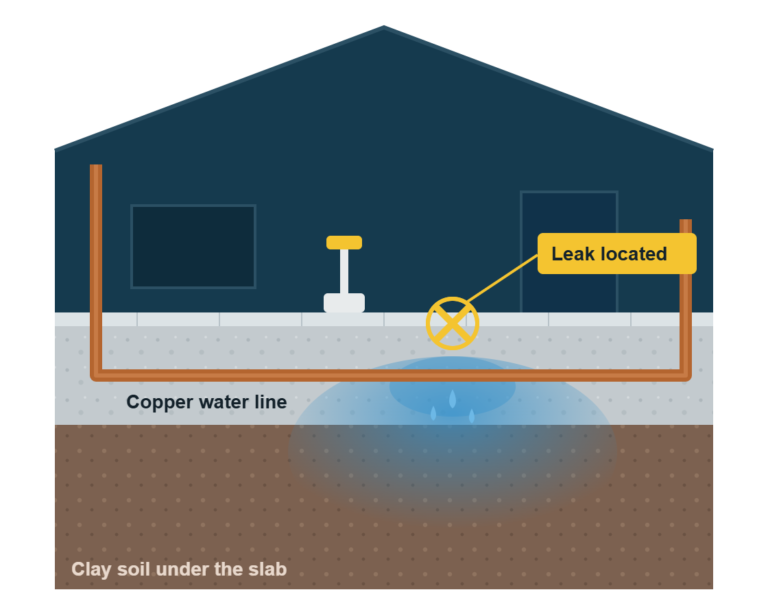
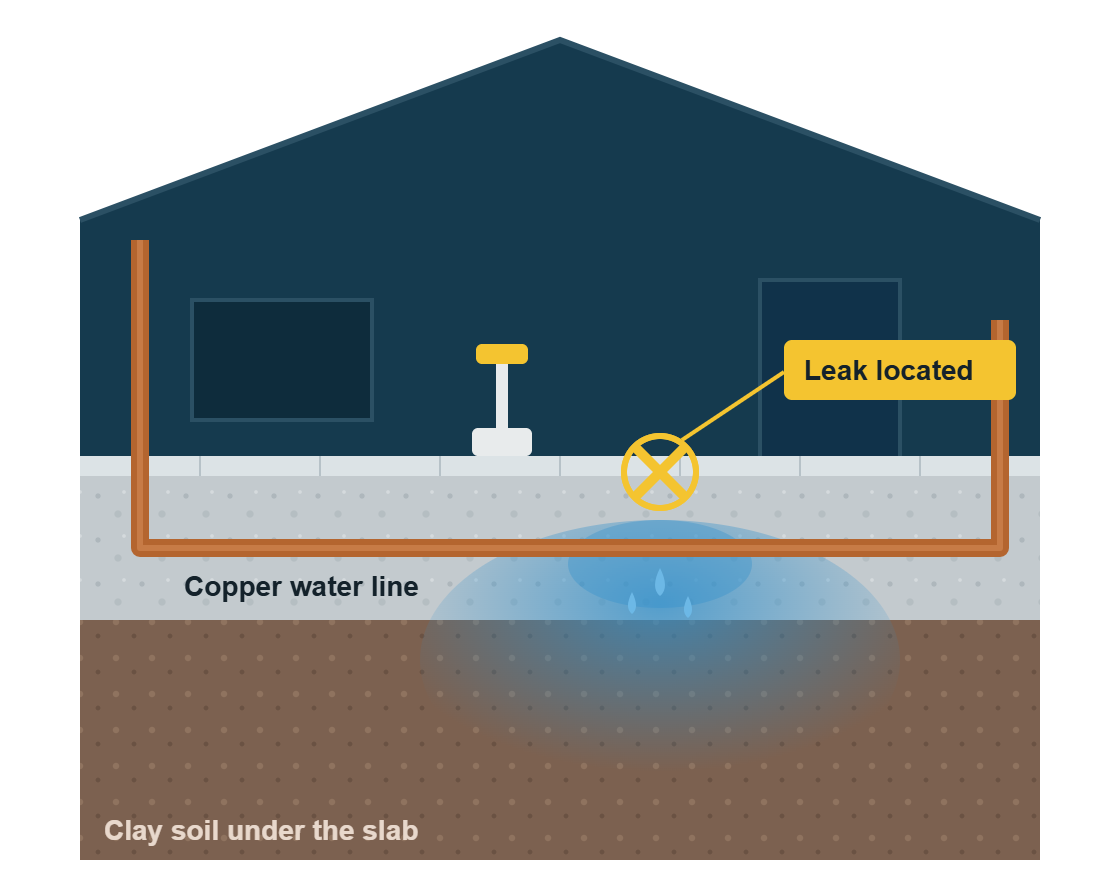
Before anything can be fixed, the leak has to be located. A professional slab leak detection visit usually takes 1 to 3 hours. You’ll leave with the leak’s location and your repair options. Learn how detection works →
Step 2: Choosing the repair: same day to a few days
How fast this goes depends mostly on you:
If water is actively leaking, shutting off the main valve (or just the hot side) buys you time to decide without more damage. See our emergency guide.
Step 3: Permits, if needed: varies
Some repairs, especially reroutes and repipes, may require a permit and an inspection. That can add time before or after the work.
Step 4: The repair itself
This depends entirely on the method. See the next section.
Step 5: Testing: usually same day
Once the pipe is repaired, the line is tested to make sure it holds before anything is closed back up.
Step 6: Restoration: days to a week or more
This is where most of the “household time” goes:
Step 7: Drying out water damage, if any
If the leak has already soaked flooring or walls, drying comes first. The EPA recommends drying water-damaged materials within 24 to 48 hours to help prevent mold, but fully drying out a space can take longer depending on how wet it got.
How Long Each Repair Method Takes
Spot repair: often the fastest plumbing fix
The slab is opened directly over the leak, the damaged section of pipe is replaced, and the concrete is patched.
Best for: a single leak in an accessible spot. Learn about slab leak repair →
Reroute: often faster to “normal”
The leaking line under the slab is abandoned, and a new line runs through the walls or attic.
Why it can be faster overall: there’s no concrete to cure and no floor to replace. For a leak under tile or hardwood, a reroute can get your home back to normal sooner than a spot repair, even if the plumbing work takes a bit longer. Learn about rerouting →
Whole-house repipe: the biggest job
All of the home’s water supply lines are replaced.
Learn about whole-house repiping → Not sure which method fits? See spot repair vs. reroute vs. repipe.
Three Example Timelines
Illustrative examples to show how timelines add up, not promises for any specific home.
Example 1
Spot repair under carpet in a spare bedroom
Day 1: Leak located in the morning; repair approved; slab opened, pipe fixed, line tested, concrete patched
Following days: Concrete patch dries
After that: Carpet and pad reinstalled or replaced
Example 2
Hot water reroute, leak under kitchen tile
Day 1: Leak located; reroute approved; hot side shut off so cold water stays on
Day 2–3: New line run through walls/attic, connected, and tested; old line capped
Following days: Drywall patched, textured, and painted
Kitchen tile: Never touched
Example 3
Whole-house repipe after repeat leaks
Before: Permit obtained, furniture moved away from walls
Repipe days: New lines installed room by room and tested
Inspection: City inspection, if required
After: Drywall patching and paint throughout
What Makes It Take Longer
What Helps It Go Faster
Will I Have Water During the Repair?
Usually, water to the house is off while the actual pipe work is being done, and back on once the line is repaired and tested.
For hot water leaks: often only the hot side needs to be shut off, so you can keep cold water for toilets and taps while you wait. See our hot water slab leak page.
Can I Stay in My Home?
For most spot repairs and reroutes, homeowners stay home. Expect noise and some dust during the work, especially when concrete or drywall is cut. For whole-house repipes, many homeowners also stay, but plan for a few disruptive days.
A Real Job: Why the Repair Method Matters
“On one job, we found a hot water leak underneath a customer’s kitchen floor. A spot repair would have meant opening up the tile, so we recommended a reroute instead. We were able to run the new line through the accessible areas of the home, test it, and get the hot water back on without cutting into the kitchen floor. The plumbing work took about two days, but the customer avoided the additional disruption of removing and replacing the tile.”
Frequently Asked Questions
The Bottom Line
The plumbing part of fixing a slab leak is often quick: hours for detection, and hours to a few days for the repair. The bigger time factor is restoration: concrete, drywall, and flooring. The fastest path back to normal starts with finding the leak early, locating it precisely, and choosing the repair method that disturbs your home the least.
Want a realistic timeline for your home?
Call Temecula Leak Experts at 1 (951) 355-0459. We’ll find the leak and tell you exactly what to expect, from the first visit to a finished floor.