
Home › Slab Leak Detection in Paseo Del Sol
Slab Leak Detection in Paseo Del Sol, Temecula
Paseo Del Sol sits in South Temecula’s Redhawk area, and most of its homes went up around 1999 to 2003. That puts their plumbing at roughly 20 to 25 years old, often the age when a home sees its very first slab leak. Curious why pipes fail at this age? Read what causes a slab leak.
If that’s where you are now, this page is for you. Here’s what to do, what to expect, and how to make sure the repair fits the problem.
Know your neighborhood
Paseo Del Sol Isn’t Paloma Del Sol
The names are almost the same, and both communities are in South Temecula, so they’re easy to mix up. But their homes were built about a decade apart:
Paseo Del Sol
Homes mostly built
Around 1999–2003
Typical plumbing age today
About 20–25 years
Most common situation
A first slab leak
Paloma Del Sol
Homes mostly built
Early 1990s
Typical plumbing age today
30+ years
Most common situation
Repeat leaks, older pipe
Why does it matter? Because advice written for 30-year-old plumbing doesn’t always fit yours. In a home Paseo Del Sol’s age, a single slab leak is usually a single repair, not the start of a whole-house repipe.
(If you are in Paloma Del Sol, see our Paloma Del Sol page.)
What to do
Your First Slab Leak: A Step-by-Step Plan
Step 1: Notice the signs
A warm spot on the floor
A water bill that’s higher than it should be
Water sounds with everything off
A water meter that won’t stop moving
Step 2: Confirm it with your meter
Turn off all water inside and outside, including irrigation. If the meter still moves, water is escaping somewhere. Our high water bill guide helps you rule out a toilet, sprinkler, or water softener first.
Step 3: Limit the damage
If water is coming up through the floor, shut off your main water valve. If a warm floor suggests a hot water leak, closing the cold inlet valve on your water heater stops the hot-side flow while keeping your cold water on.
Step 4: Get the leak located, before anyone quotes a repair
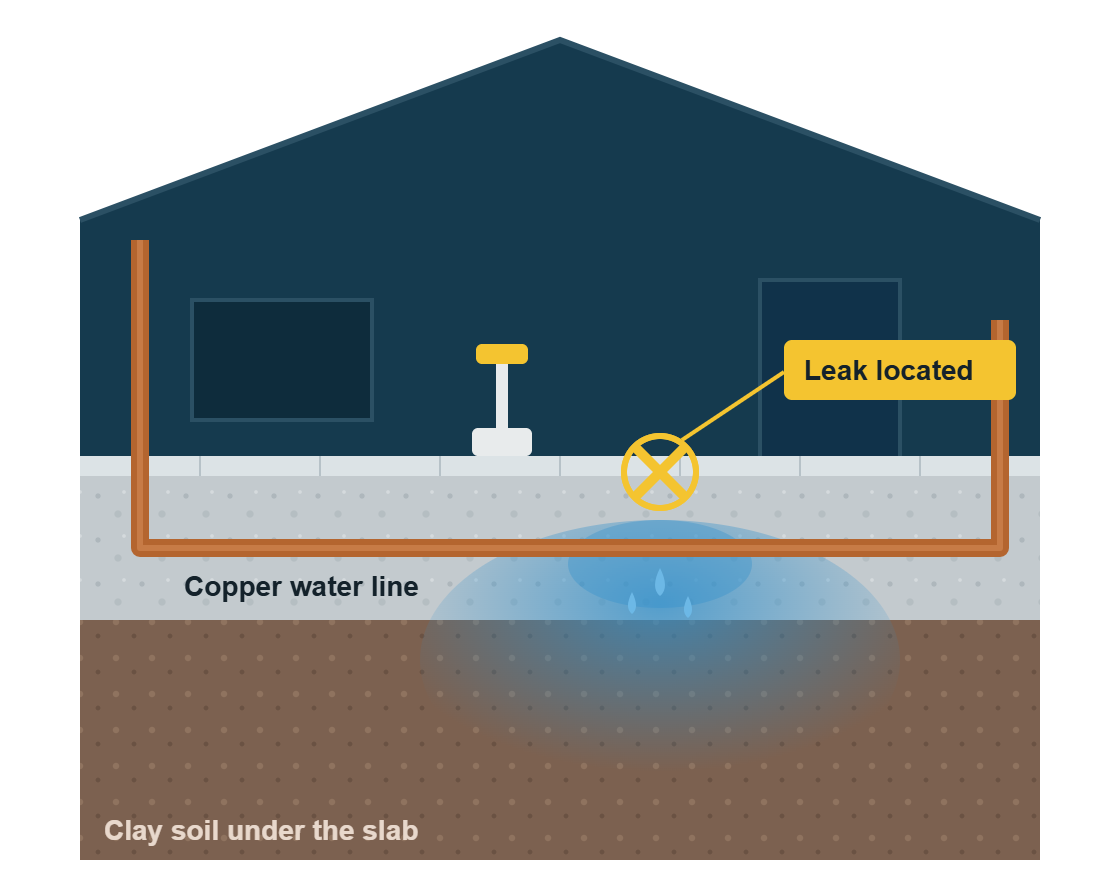
A repair quote is only as good as the information behind it. If someone quotes you a repair without first finding the leak, they’re guessing. Professional detection pinpoints the exact spot before anything is opened.
Step 5: Choose the repair that fits
Step 6: Keep your paperwork
Hold on to your detection report and repair invoice. They’re useful for an insurance conversation, for a possible leak adjustment from your water provider, and for disclosure if you ever sell.
Choosing the repair
Spot Repair or Reroute? It Often Depends on What’s on Top
For a first leak in a Paseo Del Sol home, the choice usually comes down to two options, and the flooring above the leak often decides it.
Carpet or an easy-to-reach area
Usually the better fit: Spot repair
Why: Opening the slab over the leak is straightforward to restore
Tile, hardwood, or kitchen cabinets
Usually the better fit: Reroute
Why: Bypasses the leak through walls or attic, so finished flooring stays untouched
A line that’s leaked before
Usually the better fit: Reroute
Why: Replaces the failing run with new pipe instead of patching it again
We’ll show you both options and explain which one we’d choose and why, once we know exactly where the leak is.
Detection
Finding the Leak
We confirm the leak, narrow it to hot or cold and inside or outside, then mark its exact location under your slab. Most visits take 1 to 3 hours, and you get a written report with repair recommendations.
Services for Paseo Del Sol Homes
If leaks keep coming back, see whole-house repiping. For a soggy yard and a spinning meter, see main water line leaks.
FAQ
Paseo Del Sol Slab Leak FAQ
Talk to us
Start With an Answer
A first slab leak feels like a big deal, and it can be, if it’s ignored. Found early and fixed the right way, it’s usually one targeted repair. Call us, and we’ll find exactly where the water is going.
Also serving:
Temecula Leak Experts
Address: 27637 Commerce Center Dr, Temecula, CA 92590
Email: info@slableakdetectiontemecula.com
Hours: Open 24 hours