High Water Bill in Temecula? 7 Things to Check Before You Call a Plumber
You open the water bill, and the number is way higher than last month. Nothing changed at home. Same people, same routines, same sprinklers. And your mind goes straight to the worst case: something is leaking under the house.
Maybe. But maybe not.
We find slab leaks for a living, and here’s something you might not expect us to say: a lot of high water bills have nothing to do with a slab leak. Many come from things you can check yourself in a few minutes, for free.
So before you call anyone, including us, work through this list.
First, Make Sure You’re Comparing the Right Numbers
Before you hunt for a leak, make sure the bill is actually telling you something is wrong.
If the jump still doesn’t make sense, keep going.
1. A Toilet That Never Stops Running
This is the most common hidden water waster in any home. A worn flapper inside the tank lets water slip into the bowl around the clock, often too quietly to notice.
How to check (10 minutes):
Check every toilet in the house. A replacement flapper costs a few dollars at any hardware store.
2. Your Irrigation System
In Temecula, the irrigation system is often the biggest water user on the property, and one of the easiest places for waste to hide.
According to the EPA, an irrigation leak about as thick as a dime can waste around 6,300 gallons a month. And it doesn’t have to be a leak. It can simply be a change you didn’t notice.
What to check:
Watch each zone run for a minute. You’ll often spot the problem right away.
3. A Water Softener Stuck in Its Cycle
Plenty of Temecula homes have water softeners. A softener regularly flushes itself by sending water down a drain line. If it gets stuck in that cycle, it can send water down the drain for hours, or even nonstop.
How to check:
If it seems stuck, check the manual or call the company that services it.
4. Your Pool or Spa Auto-Fill
If you have a pool or spa with an automatic fill valve, it quietly tops off the water as it drops. Evaporation in hot weather is normal. But a stuck fill valve, or a leak in the pool itself, can mean the auto-fill is running far more than you think.
What to check:
5. Your Water Heater’s Relief Valve
Every tank water heater has a safety valve called a temperature and pressure relief valve. It’s connected to a pipe that usually runs outside or down toward the floor. If that valve is failing, or if pressure in your system is too high, it can let water escape.
How to check:
While you’re there, look at the base of the tank for any water pooling.
6. The Small Drips That Add Up
Individually, these seem harmless. Together, they’re not.
The EPA estimates that a faucet dripping once per second wastes more than 3,000 gallons a year.
Walk around and check:
7. The Bill Itself
Sometimes the plumbing is fine, and the bill is the thing to look at.
Most of Temecula is served by Rancho California Water District (Rancho Water). Rancho Water has used a budget-based billing system, where each customer gets a customized daily water budget based partly on local weather. Using more than your budget can move part of your usage into higher-priced levels.
That means:
There’s also a useful tool you may already have: Rancho Water has said its automatic meters allow customers to see daily water budget information and get alerts when they go over. Log into your account and look at your daily usage. If your home is using water every single hour, including overnight when everyone’s asleep, that’s a strong sign of a leak.
Not on Rancho Water? Check your bill to see who your provider is, and ask them the same questions.
Now Do the Meter Test
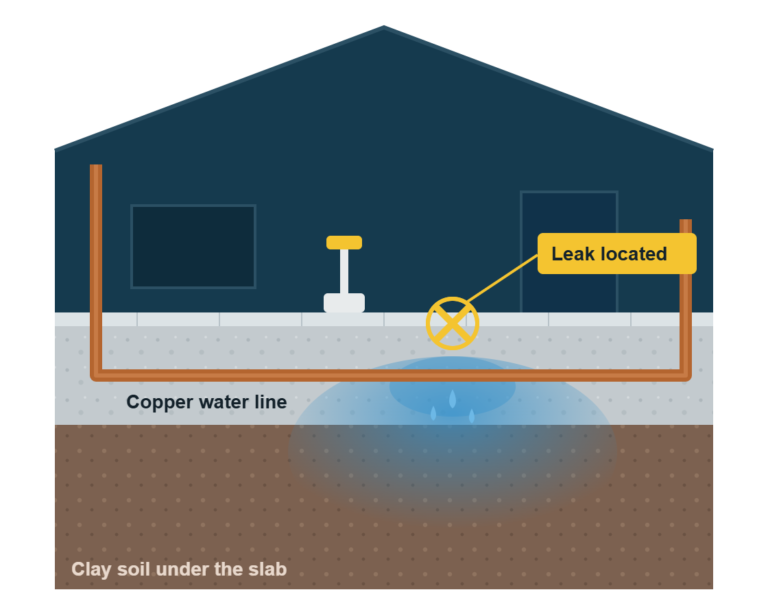
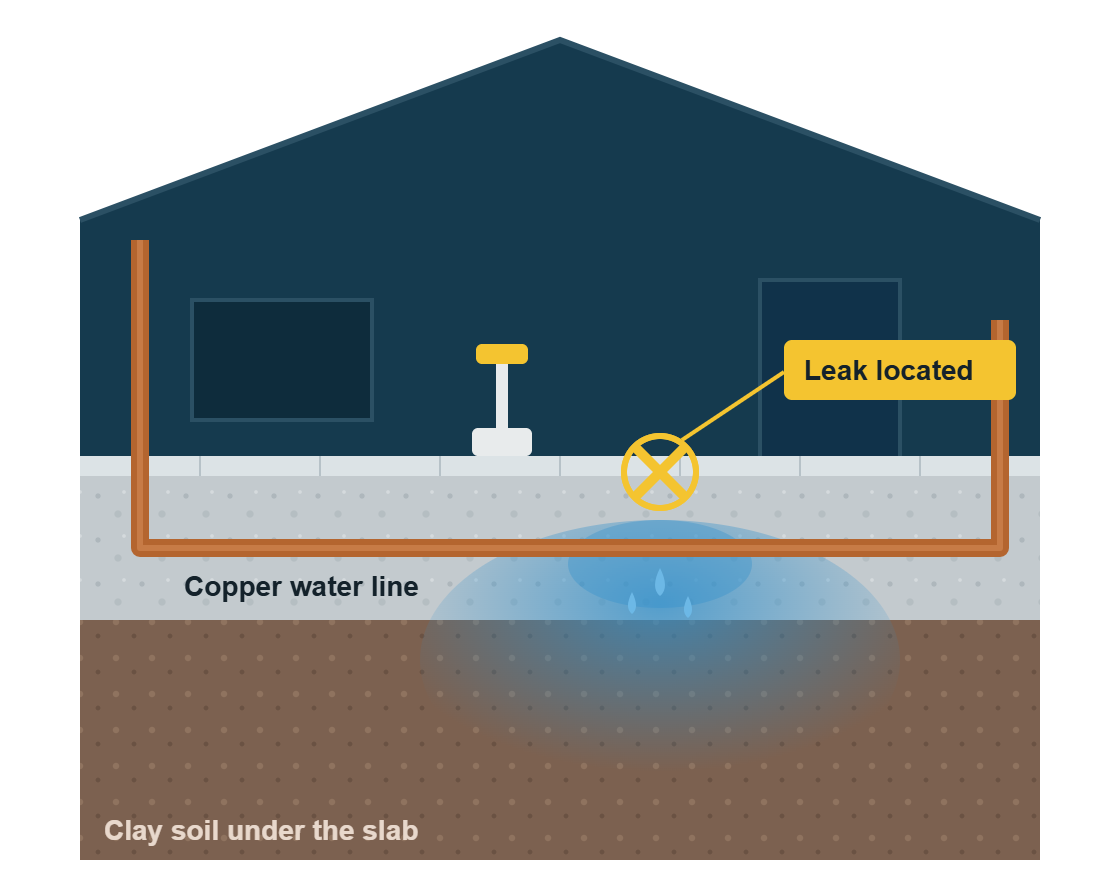
If you’ve worked through all seven and still can’t explain the bill, it’s time for the one test that tells you for certain whether water is leaking.
Turn off every faucet, appliance, and your irrigation system.
Find your water meter, usually in a box near the curb.
Look at the small leak indicator, a little triangle or dial that spins with even tiny water flow.
If it’s moving, water is leaving your system somewhere.
Then narrow it down:
For a step-by-step guide to tracking down where the water is going, see our water leak detection page.
When It’s Time to Call Us
Call a leak detection professional if:
At that point, guessing gets expensive. A professional slab leak detection visit pinpoints exactly where the water is going before anyone opens a floor, wall, or yard.
Don’t Forget to Ask About a Leak Adjustment
If a leak caused your high bill, it’s worth asking your water provider whether they offer a one-time leak adjustment after the repair is done. Policies vary, so ask, and keep your repair paperwork as proof.
Quick Checklist
Still can’t explain your bill?
Call Temecula Leak Experts at 1 (951) 355-0459. We’re open 24 hours and serve homeowners across Temecula. And if it turns out to be something simple, we’ll tell you.