Slab Leak Emergency: What to Do in the First 30 Minutes
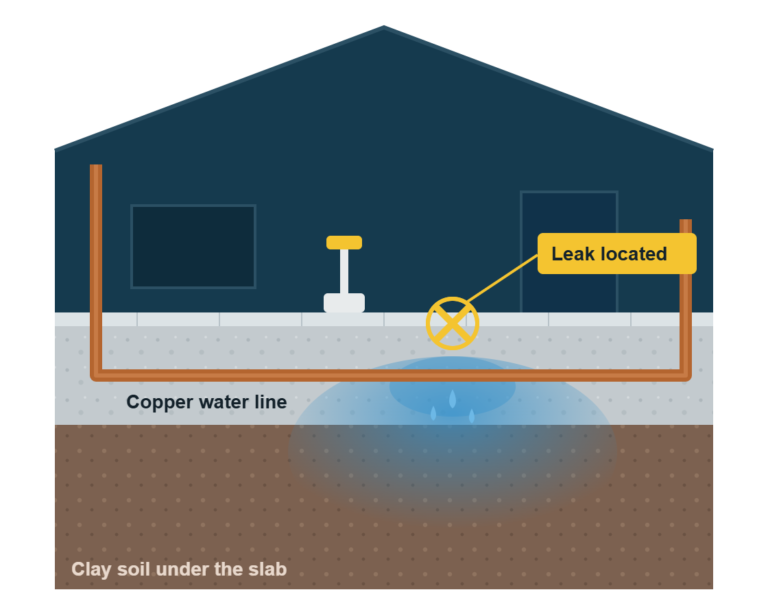
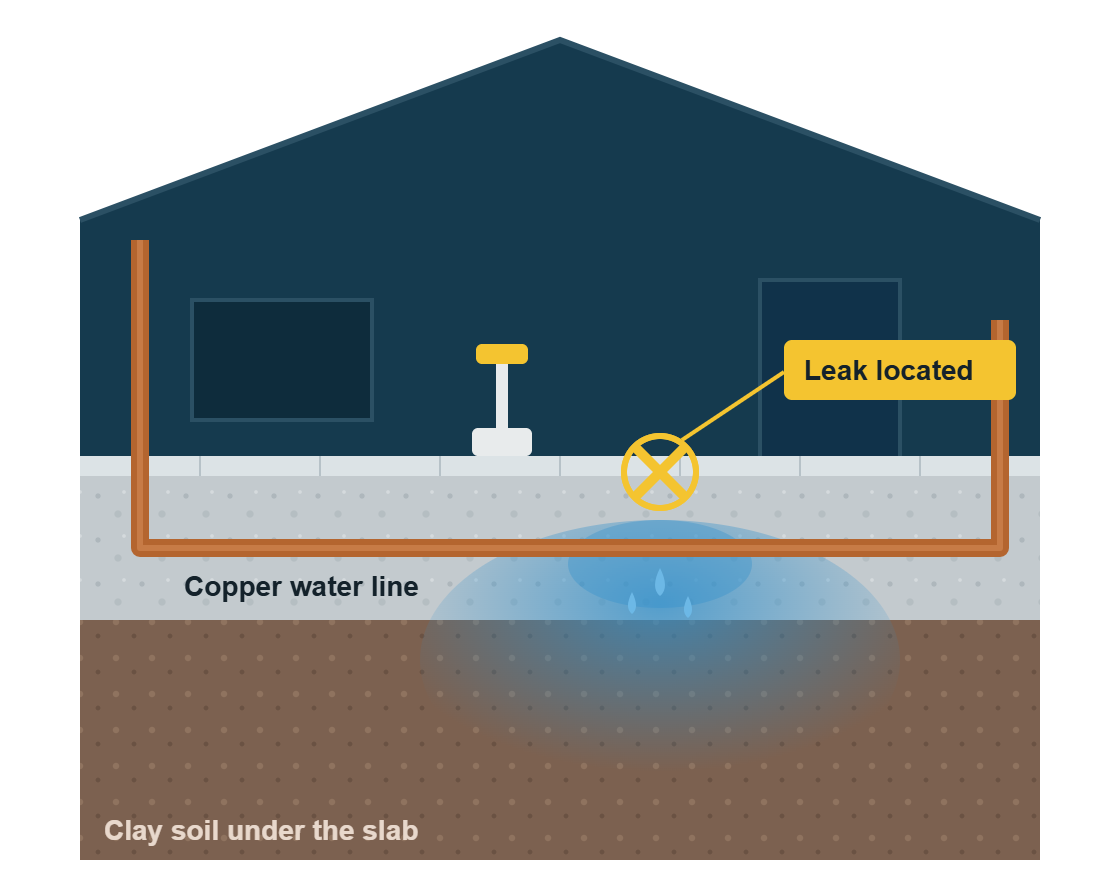
Water is coming up through the floor. Or a spot on the tile is suddenly hot. Or you can hear water rushing somewhere under the house, and it won’t stop.
Your heart rate jumps, and the first instinct is to do something, anything. That instinct is right. But the order you do things in matters.
This guide walks you through the first 30 minutes of a slab leak, step by step, plus what to avoid and what happens next. Read it now, before you need it. It’s much easier to find your shutoff valve on a calm afternoon than at 2 a.m. with water on the floor.
First: Is This Actually an Emergency?
Not every slab leak needs a middle-of-the-night response. Here’s how to tell:
🔴 Emergency
Water coming up through the floor or pooling indoors
What to do: Shut off your main water now, then call
🔴 Emergency
Water near electrical outlets, cords, or appliances
What to do: Stay out of the water; shut off power to that area if you can safely reach the breaker
🟠 Urgent
A hot spot on the floor that’s getting bigger, or loud rushing water
What to do: Isolate the hot side or shut off the main, then call today
🟡 Soon
A rising water bill, a warm spot, or a meter that won’t stop
What to do: Not an emergency, but schedule detection within a few days
If you’re in the yellow row, take a breath. You have time. Our high water bill guide will help you check a few simple things first.
If you’re in the red or orange rows, keep reading.
Minutes 0–5: Stop the Water
Shut off your main water valve
This is the single most important thing you can do. Every minute it’s open, more water is reaching your floor.
Where to look in most Temecula homes:
It’s usually a lever or a round wheel handle. Turn it clockwise (or turn the lever across the pipe) until it stops.
Can’t find it, or it won’t budge? Many homes also have a valve inside the water meter box near the curb, on the house side of the meter. If you can reach it safely, that will shut off water to the whole property. If not, call your water provider. They can shut off water at the meter.
Option: shut off only the hot side
If the clues point to the hot water line (a hot spot on the floor, or water that feels warm), you can often stop the leak while keeping cold water on:
Find the cold water inlet valve on the pipe going into the top of your water heater.
Turn it off gently. Don’t force an old valve that’s stuck.
You’ll lose hot water until the leak is fixed, but toilets and cold taps keep working. Our hot water slab leak page explains more.
Minutes 5–15: Protect Your Home and Yourself
Stay safe around electricity
Water and electricity don’t mix. If water is near outlets, power strips, or appliances, stay out of the water. If you can reach your electrical panel without walking through water, switch off the breaker for that area. If you can’t, leave it and tell us when you call.
Move what you can
Start removing standing water
Mop, towel, or use a wet/dry vacuum on standing water. You don’t need to get everything. Just stop it from spreading.
Minutes 15–30: Document and Call
Take photos and video
Before you clean up too much, record:
These photos matter for insurance, and they help us understand what’s happening before we arrive.
Call for leak detection
Tell us:
Call your insurance company
Many policies expect you to take reasonable steps to limit damage and to report a loss promptly. A quick call starts the clock in your favor. See does homeowners insurance cover slab leaks? for what’s usually covered.
What NOT to Do
In a panic, it’s easy to make the problem bigger or more expensive. Avoid these:
Technician Story: Why Acting Quickly Matters
“One of the most important things we tell homeowners during a slab leak emergency is to shut off the main water supply immediately,” explains Mike. “For example, when water starts coming through the floor, homeowners sometimes focus on cleaning it up instead of stopping the source. By turning off the water first, they can prevent additional flooding and reduce potential damage to flooring and walls. Finding the exact leak location before opening the concrete also helps avoid unnecessary repairs.”
The First 48 Hours: Drying Matters
Once the water is off, the next priority is drying. The EPA recommends drying water-damaged areas and materials within 24 to 48 hours to help prevent mold growth.
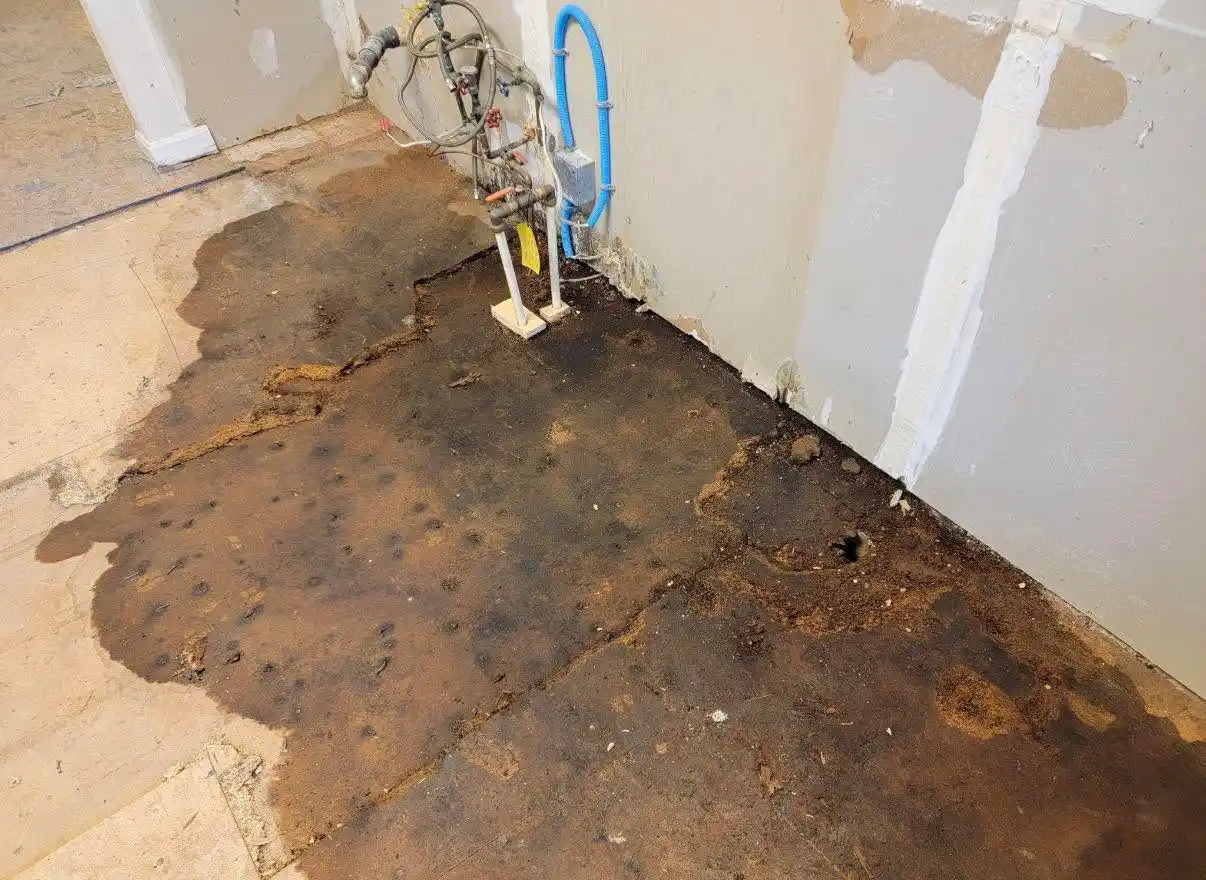
That doesn’t mean mold is guaranteed after 48 hours. But the longer carpet, padding, drywall, and wood stay wet, the higher the risk.
What helps:
If the leak has already caused damage, we coordinate drying, mold prevention, and flooring repair through a water damage restoration partner.
What Happens Next
We locate the leak. Detection confirms exactly where the water is escaping, usually in 1 to 3 hours.
You get your options. Depending on where the leak is, that may be a spot repair, a reroute, or, if leaks keep happening, a repipe.
Your water comes back on. Once the leaking line is fixed or isolated, the rest of your plumbing can usually be turned back on.
You keep the paperwork. Your detection report and repair invoice help with insurance and a possible leak adjustment from your water provider.
Do This Today: The 5-Minute Prep
Don’t wait for an emergency to learn your home. Take five minutes this week:
Tip: Take a photo of each valve location and save it on your phone, or tape a note inside a kitchen cabinet so anyone in the house can find them.
Quick Emergency Card
Print this or screenshot it.
Water coming up through your floor right now?
Shut off the main, then call 1 (951) 355-0459. We’re open 24 hours, and we’ll help you figure out exactly what’s happening.