Warm Spot on Floor: Is It a Slab Leak? How to Tell for Sure
You’re walking through the kitchen barefoot and something feels off. One patch of tile is noticeably warmer than the rest. You step back and forth a few times. It’s definitely warm.
A warm spot on the floor is one of the best-known signs of a hot water slab leak: hot water escaping under the concrete and heating the floor above it. But it isn’t the only possible explanation, and you don’t need to panic or call anyone just yet.
This guide walks you through how to tell whether your warm spot is a slab leak, using a few simple checks you can do yourself in an afternoon.
The Short Answer
A warm spot on your floor can mean a hot water line is leaking under your slab, especially if it stays warm at night, keeps coming back, and your water meter moves with everything off. It can also come from sunlight, an appliance, radiant heat, or a hot water recirculation system.
The good news: a few simple tests can usually tell you which one you’re dealing with.
Quick Clue Check
Points toward a slab leak
Points toward something else
Two or three clues in the first box? Keep reading, and plan to have it checked.
Step 1: Map the Warm Spot
Before you test anything, learn what you’re dealing with.
A clue you might not expect: Pets often find warm spots before people do. If your dog or cat has suddenly started sleeping in a new spot on a hard floor, check it.
Step 2: Measure It
Your feet are good at noticing warmth, but not at measuring it. An infrared (IR) thermometer, the point-and-shoot kind available at most hardware stores, makes this much more reliable.
Measure the warm spot, then measure the same type of flooring a few feet away.
Write down both temperatures and the time.
Repeat in the morning, afternoon, and late at night.
What you’re looking for:
There’s no single “magic number” that proves a leak. The pattern over the day tells you more than any one reading.
Step 3: Rule Out the Lookalikes
A note on hot water recirculation pumps
Some homes have a recirculation pump that keeps hot water moving through the pipes so it arrives at the faucet faster. If part of that hot water loop runs under your slab, the floor above it can feel warm, even without a leak.
How to check: If you have a recirculation pump, turn it off (or unplug it) for a day and see whether the warm spot fades. If it does, and your water meter is still with everything off, the pump may be the explanation.
Step 4: The Water Heater Cool-Down Test
This is the most useful test you can do yourself, and most homeowners have never heard of it.
The idea: If the warmth is coming from a leaking hot water line, cutting off the water heater’s supply should stop hot water from flowing out of the leak. Over the next few hours, the floor should cool down.
How to do it:
Measure the warm spot with your IR thermometer and write it down.
Turn off your recirculation pump, if you have one.
Close the cold water inlet valve on top of your water heater. Turn it gently, and don’t force a stiff valve.
Wait a few hours. Cold water still works in the house; you just won’t have hot water.
Measure the spot again.
What it tells you:
When you’re done, open the valve back up, unless you suspect a leak. In that case, leaving the hot side off can limit water loss until it’s checked.
Step 5: Check Your Water Meter
Finally, confirm whether water is actually escaping.
Turn off all water inside and outside, including irrigation.
Look at the leak indicator on your water meter.
If it’s moving, close the water heater’s cold inlet and look again.
What the result means:
For a full walkthrough, see our step-by-step guide to finding a slab leak.
Why the Warm Spot Isn’t Always Right Over the Leak
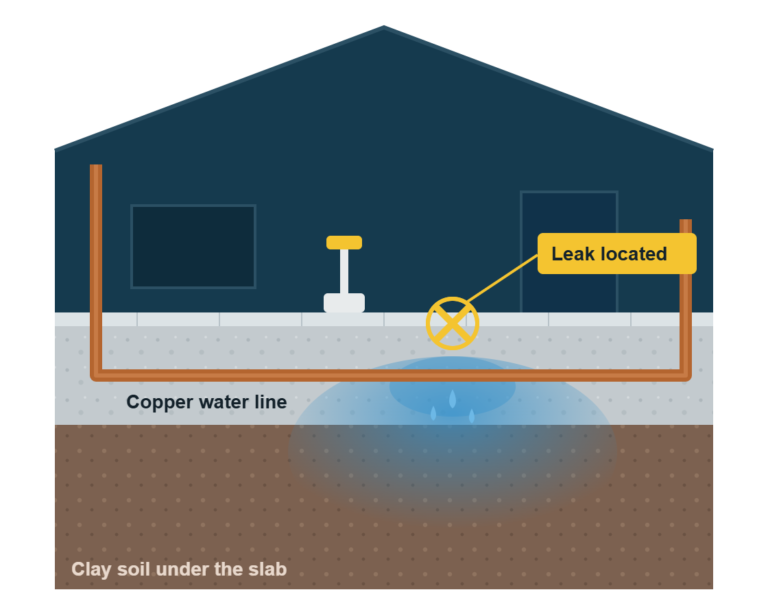
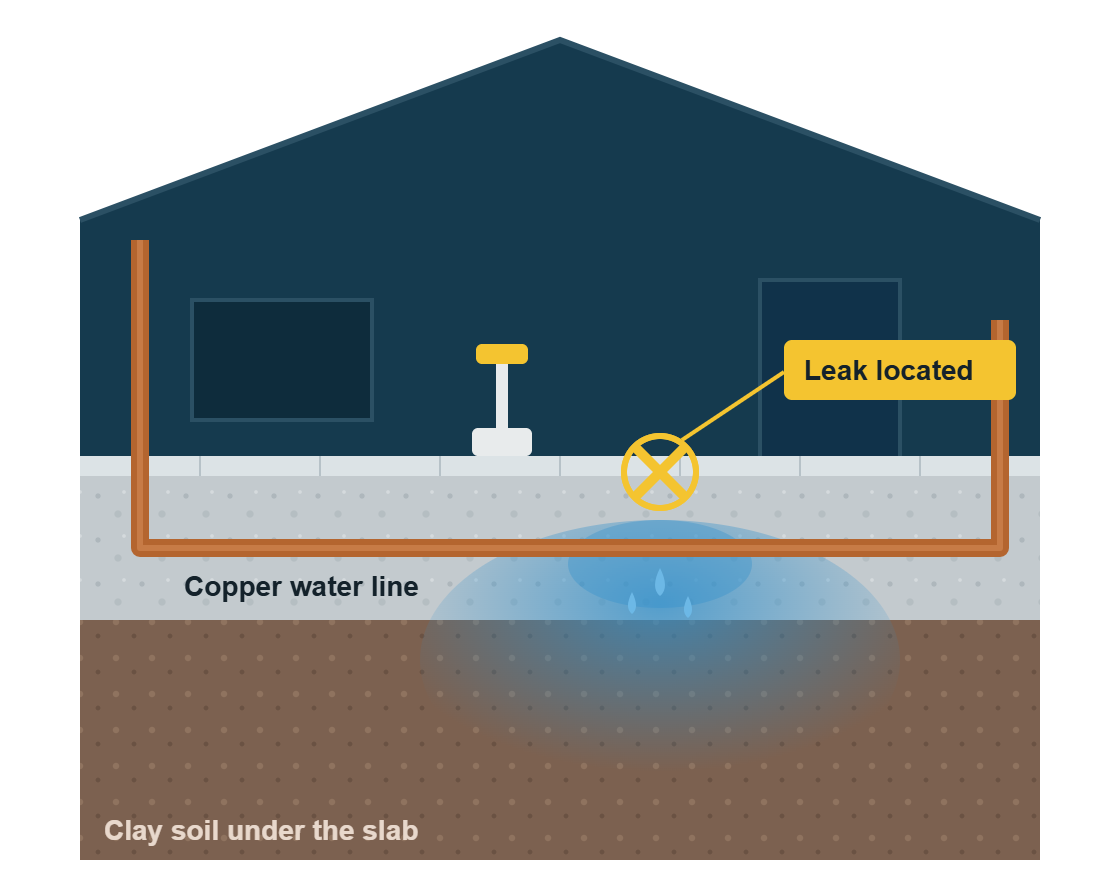
Even when a warm spot is caused by a slab leak, the leak isn’t always directly underneath it.
That’s why you shouldn’t cut into the floor where it’s warmest. Professional detection confirms the actual leak location using more than one method, like thermal imaging and acoustic listening. How plumbers find slab leaks →
Warm Floor, But No Water Anywhere?
That’s normal. Many hot water slab leaks never show water on the surface. The water drains into the soil beneath your home instead. A warm spot, a busy water heater, or a higher gas or electric bill may be the only signs you get.
So It’s Probably a Leak. What Now?
Leave the water heater’s cold inlet closed to stop hot-side water loss. Your cold water still works.
Don’t break the floor where it feels warmest.
Call for leak detection to pinpoint the exact location.
If water is coming up through the floor, shut off your main water and follow our slab leak emergency guide.
What a hot water slab leak repair usually looks like
Hot water leaks under tile or kitchen cabinets are often fixed with a reroute: the leaking line is capped, and a new hot water line runs through the walls or attic, so your floor stays untouched. Learn about hot water slab leak repair →
Technician Story
Mike was called out to a home in Temecula where the homeowner noticed a warm spot on the kitchen floor. At first, it looked like a hot water slab leak, but the warm area wasn’t directly over the leaking pipe. After checking the water meter and using thermal imaging, Mike found that the leak was several feet away from the warmest spot. The team was able to pinpoint the actual leak location before any flooring was opened, saving the homeowner from unnecessary damage and repairs.
Your Warm Spot Checklist
Frequently Asked Questions
The Bottom Line
A warm spot on your floor is worth taking seriously, but not worth panicking over. Map it, measure it, rule out the lookalikes, and do the water heater cool-down test. If the spot cools down when the hot side is shut off and your meter is moving, you’re very likely dealing with a hot water slab leak, and it’s time to have it pinpointed.
Found a warm spot you can’t explain?
Call Temecula Leak Experts at 1 (951) 355-0459. We’ll find exactly where the heat is coming from, before anything is opened.