
Home › Slab Leak Rerouting
Slab Leak Rerouting in Temecula
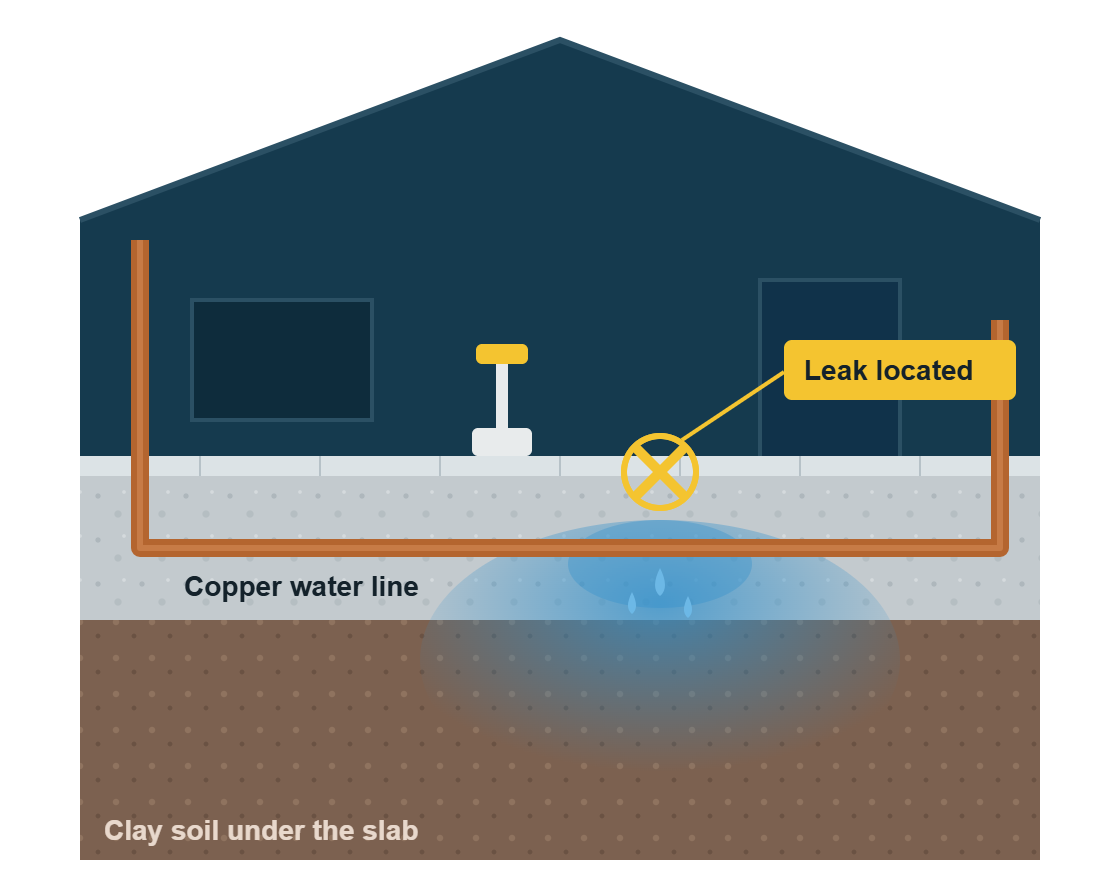
A leak under your slab doesn’t always mean jackhammering your floor. With a reroute, the leaking pipe stays where it is, under the concrete, and is taken out of service. A new water line is run through your walls or attic to replace it.
Temecula Leak Experts provides slab leak rerouting for homeowners in slab-foundation homes across Temecula.
The basics
What Is Slab Leak Rerouting?
Slab leak rerouting is a repair that bypasses a leaking water line under your concrete slab instead of breaking the concrete to fix it. The leaking line is disconnected and capped, and a new line is installed above the slab, usually through walls or the attic, to deliver water to the same fixtures.
Is it the right fit?
When Rerouting Makes Sense
Rerouting is usually the better choice when breaking the slab would cause more damage, cost, or risk than running a new line. It tends to fit when:
The leak is under something hard to remove, like kitchen cabinets, tile, or hardwood flooring.
The same line has leaked before, so patching it again would just leave you with more old pipe.
You want to avoid concrete work inside your living space.
The leaking line serves a limited area, such as one bathroom or the kitchen, so the new run is reasonably short.
Rerouting may not be the best fit when the leak is in an easy-to-reach spot on otherwise healthy pipe. In that case, a spot repair can cost less. It can also be harder in homes with vaulted ceilings or very limited attic access, because there’s less room to run the new line.
We’ll explain which option fits your home, and why, before any work is approved. For a side-by-side look at all the options, see our slab leak repair page.
Compare
Reroute vs. spot repair at a glance
Spot repair
What happens
Concrete is opened over the leak and the pipe section is fixed
Your floor
Opened over the leak, then restored
Openings at home
One opening in the floor
What you end up with
Repaired old pipe
Reroute
What happens
Leaking line is capped; a new line runs through walls or attic
Your floor
Left untouched
Openings at home
Small drywall openings, then patched
What you end up with
New pipe for that run
Know the difference
Reroute vs. Repipe: What’s the Difference?
A reroute replaces one leaking line. A repipe replaces the water lines throughout the house. Homeowners often hear these terms used interchangeably, but they’re very different jobs with very different price tags.
A single slab leak doesn’t automatically mean you need a repipe. A repipe starts to make more sense when leaks keep happening in different places or the pipe is deteriorating throughout the house. If you’ve been quoted a repipe for a single leak, it’s fair to ask why.
Your quote
What affects the price
Our process
How a Slab Leak Reroute Works
We confirm which line is leaking.
For a reroute, the key is identifying which water line has failed. That’s the line that gets bypassed.
We plan the new route.
We look at your walls, attic access, and fixture locations to find the shortest practical path.
We make small access openings in drywall where the new line needs to connect or pass through.
We run the new line and connect it to the existing plumbing at each end.
We cap the old line, so the leaking section under the slab no longer carries water.
We test the new line.
We close the openings.
At home
What to Expect at Home
A reroute is usually much less disruptive than cutting into a concrete floor, but it isn’t invisible. Here’s what to plan for:
Before you approve
Questions to Ask Before Approving Any Reroute
Whoever you hire, these questions help you compare quotes fairly:
Meet the team
Who Does the Work
Our technicians include:
Mike Anderson
5 years of plumbing experience, specializing in leak detection.
Daniel Carter
6 years of experience and more than 70 completed projects.
Temecula Leak Experts has completed over 100 projects.
Service area
Temecula Neighborhoods We Serve
Temecula Leak Experts is based at 27637 Commerce Center Dr in Temecula. We provide slab leak rerouting in these neighborhoods:
FAQ
Frequently Asked Questions
Talk to us
Call Temecula Leak Experts About Slab Leak Rerouting
If you’d rather not break your floor to fix a slab leak, a reroute may be the right answer. Call us, tell us what’s happening, and we’ll help you figure out whether rerouting fits your home and what it would cost.
Temecula Leak Experts
Address: 27637 Commerce Center Dr, Temecula, CA 92590
Email: info@slableakdetectiontemecula.com
Hours: Open 24 hours, emergency service available